Showing posts with label clergy. Show all posts

A Dia de los Muertos Wedding

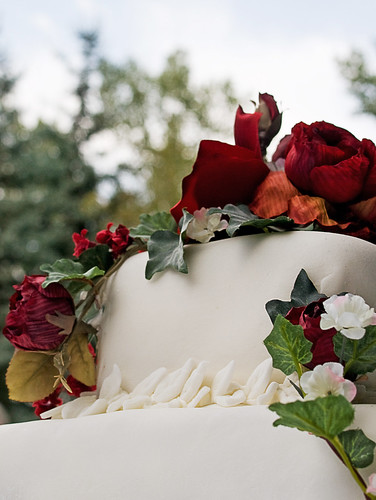
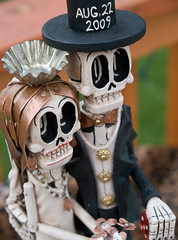
Themed weddings are always fun, and this bride and groom took the Dia de los Muertos theme and ran with it! Everything from the cake topper that is pictured here, to the customized wedding chocolates were permeated with the grinning skeletons of the Day of the Dead. Even some of the wedding gifts reflected the theme in their wrappings and decorations.

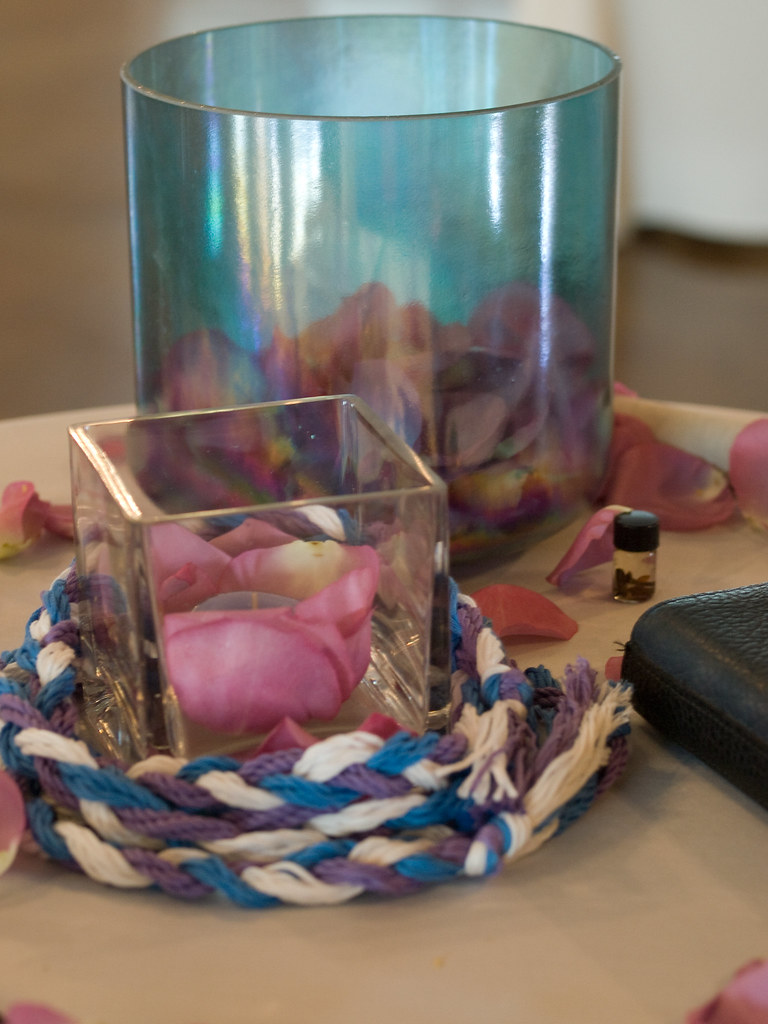
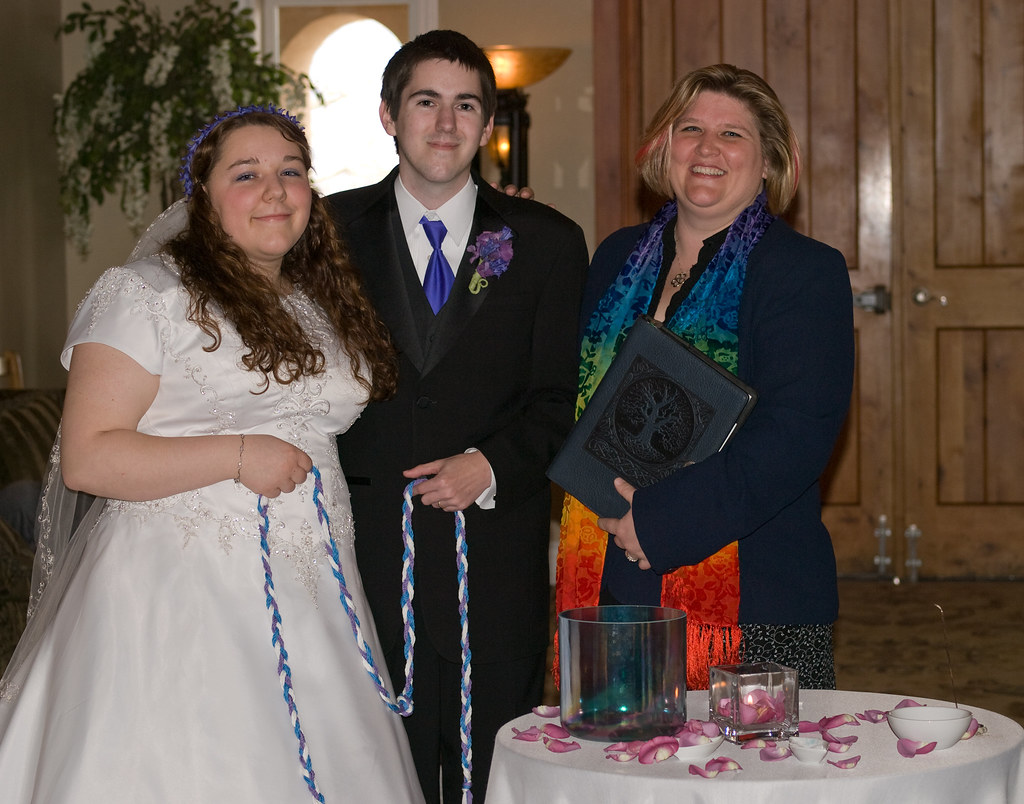
Vickie and Brian are two people who know what they like and their personalities were very much in force for this wedding, expressed in every detail of their ceremony and in the setting of the wedding. I did a handfasting for them, and since they are from Southern Utah, there was quite a bit more planning involved than the usual wedding held here in the Salt Lake valley. The bride and groom visited me at the Temple a few weeks prior to their wedding so that they could create their handfasting cord with me, and then I traveled to their home in Southern Utah for the ceremony.
There are several things which make this wedding very memorable, besides the theme!
Vicki is employed at the beautiful Cedar Breaks lodge, and since I normally request that the wedding party provide some form of lodging for me if the wedding is more than 100 miles away from my home, she arranged for my family to enjoy a beautiful room at the lodge for the weekend. We had never experienced the Cedar Breaks National Monument, and I can highly recommend the experience! The lodge is located just a few miles from the entrance to the monument, and so it is a perfect place to stay and enjoy the surrounding environment. So besides having the honor of performing the ceremony, we had the great pleasure of exploring one of Utah's natural wonders!

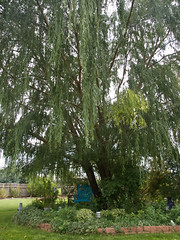
The wedding was held in Vicki and Brian's beautiful back yard. The centerpiece of their yard was a huge, beautiful weeping willow tree, complete with a landscaped island containing benches, fragrant herbs and a small pond and water fountain. The ceremony was held under its sweeping branches, with most of the wedding guests seated in the ample shade it provided.

It was a bit windy that afternoon but with a little encouragement, the winds calmed down so that we could have a perfect ceremony. After the ceremony and dinner, we signed the wedding documents and then the newlyweds cut their beautiful cake and we lingered long into the warm summer evening, enjoying all of the decorative personal touches in their home and yard and getting to know the friends and relatives of the bride and groom.
One of the other most memorable parts of this weekend would come only as we were driving home from the ceremony on Sunday afternoon, when I received a texted photo showing that the beautiful tree had blown down on the night of their wedding. The feeling amongst all of the psychics and sensitives within Sacred Circle (and echoed by the bride as well) was that the tree was just waiting until the wedding was over, hanging on to be there for them just one last day. It was a bittersweet reminder of how quickly things can change, but I thank both Vickie and Brian for letting me be a part of their special day, and for the opportunity to explore a part of Utah that we had not seen before.

read more on this wedding or handfasting topic

Summer Solstice Weddings

This year I was privileged to do two weddings around the Summer Solstice
Summer Solstice Wedding

The first one was a more traditional "white wedding" which turned out to be a most interesting ceremony. The wedding of Andrew and April was my first "joint" wedding with another Clergy person. The groom is from the Eckankar tradition, and so his clergy representative was an Eck clergy person.

The second Summer Solstice wedding was a private handfasting in a beautiful park, which was the location of the couple's first kiss. Summer Solstice Handfasting

read more on this wedding or handfasting topic

Taurus Wedding


April 2008 Wedding
Originally uploaded by bluheron
My final wedding in April took place in Memory Grove park this Tuesday night.

I presented the bride and groom with a keepsake wedding chart, and spoke with them regarding the "sun sign" of their marriage.


Although June is a traditional month for weddings, astrologically speaking, the sun sign of Taurus (April 21-May 22) is a great time for marriages. Taurus lends a great, earthy strength to weddings performed under this sign. Taurean marriages may be characterized by the willingness of both parties to work hard for their home and material comforts. The earth energies of Taurus can also lend a sense of comfort and stability to the partnership. One pitfall to watch out for is a tendency toward stubbornness when it comes to matters concerning the home and material possessions! Overall though, a Taurean wedding is usually assured of a loving and long-lasting relationship!

read more on this wedding or handfasting topic

The tradition of broom jumping in weddings & handfastings


Fairy Broom
Originally uploaded by bluheron
Many couples want to "jump the broom" at the end of their ceremony. This is one of the oldest marriage traditions from the British Isles, predating even the handfast cord. Some scholars have traced the broom-jumping tradition to a centuries-old Welsh custom, priodas coes ysgub, or "broom-stick wedding". In the early 16-18th centuries in the Americas, broom-jumping was widely practiced among the slave community as their only recognized form of marriage, although it is somewhat unclear whether the slaves imported this custom from Africa or picked up the practice from American Southerners who brought the practice from the British Isles. (Dundes, Alan: ""Jumping the Broom": On the Origin and Meaning of an African American Wedding Custom")

The broom as it is used today in marriage or handfasting ceremonies represents the threshold of the home, and jumping the broom is symbolic of entering a new home together. Even if couples are already sharing a home or are currently married and are renewing their vows, jumping the broom can help symbolize entering a new stage of their relationship, and the leaving behind of old thoughts, behaviors and patterns between the two.

Many witches, wiccans and pagans are already familiar with the usage of the broom as a symbolic way of sweeping out old energies and clearing away negativity. This is also a great usage of it in a wedding, and helps the couple to come together with a "clean slate".

I normally recommend that a new broom be purchased just for the ceremony in order to avoid bringing prior energies into the ceremony, however, a broom can be part of the preparations for a wedding as well. The broom can be decorated with ribbons, flowers, crystals, charms or other items which the couple would like to help symbolize their "fresh start". After the ceremony, the broom is hung above the main entrance door of the home, as a daily reminder of the ceremony and the new life it brings.

The fairy broom featured in this post was one that was very special to the bride and groom throughout their relationship. The bride explained to me that the groom had once brought her a small trinket that she tied onto a small decorative broom that she had in her home. This started a tradition in their relationship where they would add other items to this broom to remember special times in their courtship. When it came time for the wedding, it was an important part of the ceremony to have this broom present. While not every couple incorporates a broom into their early times together, it's a great memory for this couple, and an interesting idea for other wiccan or pagan couples to think about.

Here in Utah, there are several stores which carry ceremonial brooms, and one of the stores with the best selection of brooms is Elemental Inspirations in Sugarhouse. You can also check online for some really beautiful hand-carved custom brooms at http://www.impressbylirica.com/
or check out the Broom Magic site here: http://www.broommagic.com.
The Broom Magic s
ite has some great prices on basic Witches' ceremonial besoms
as well as some nice carved kitchen brooms.

read more on this wedding or handfasting topic

Vow Renewal Wedding

This wedding was for an already-married couple who wanted to reconnect and renew their vows on the 11th anniversary of their original wedding date. It was held at a beautiful bed & breakfast in Cottonwood Heights, Utah and the original plans for a springtime outdoor wedding had to be scrapped at the last minute due to the forecast of snow, which started falling during the ceremony! The couple regrouped and ended up with the ceremony in the large greatroom in front of the fireplace.

This wedding was very special because the husband had been severely injured in an accident the previous year, and the family nearly lost him completely. Since they had never had a "big" ceremony at the beginning of their relationship, they felt that it was a perfect time to do that reconnection and renewal of their vows. It was a very emotional and touching ceremony, and I was so honored to be there for them.
Vow Renewal Wedding, April 9, 2008


This ceremony was also unusual in that the couple wanted to work within the Celtic Druid tradition of the Three Realms. Since many of my ceremonies have a stronger bias toward working with the four directions or quarters, I ended up writing a significant portion of the ceremony, including a blessing of the Three Realms for their handfasting cord. It was a great experience to reach outside my normal paradigm to help them have the ceremony that they were dreaming of. Thanks and congratulations again, Dena and Dave!

read more on this wedding or handfasting topic

April Weddings

Here are a few photos from my most recent (and first in April) wedding ceremony. We are really getting a jump on the wedding season here in Utah, with a total of 4 weddings and handfastings in April alone! I can't wait to see what May and June bring!

This wedding was a sweet young couple who are related to a couple that I did a wedding ceremony for back in March of 2006. Every now and then, such as the ceremony this weekend, I get the great joy of seeing couples and family members from previous years' weddings. Weddings are an intimate and yet simultaneously public ceremony, and it is my honor and pleasure to be able to come to know a set of families through a wedding.


Even though I am normally only working with a couple for a few days at most, I try to give a sense of warmth and friendship to the interactions that we have, and to come to the couple as a sort of tabula rasa. I see it as my job to be there completely for the couple, and to support them in their joining as the person who is most interested in what the couple needs and wants for their ceremony. I try to treat the couple as if they were my own cherished family members. You may see this type of photo below referred to in my stream as my "book" photo. Every time I do a wedding, I print out a photo of myself with the couple and add it to my book of ceremonies. I love looking back through my book at the ceremonies and remembering what made each one special and unique.


Congratulations, Joe and Samra!

read more on this wedding or handfasting topic

Barley water, a non-alcoholic mead alternative


Barley
Originally uploaded by tillwe
Following on my last topic regarding mead, here's a viable alternative beverage for your traditional pagan or celtic wiccan wedding (or variant thereof). Barley water is an ancient beverage, and is still a hugely popular drink in England. Made with honey, it's a great alternative to mead if for some reason you do not wish to (or don't have time) to use, make or acquire mead. Barley water can be made very quickly, and being made with honey and the ancient and nourishing grain, barley, still retains the symbolic qualities of beauty, fertility and joy. Most, if not all of the ingredients can be obtained at any grocery store here in Utah.

Barley is one of the most ancient of cultivated grains, with archaeological evidence from the ancient Middle East stretching back over 9,000 years.

Honey
Originally uploaded by venkane
The ancient Celts drank a precursor to the modern ale, made with fermented barley and herbs. If you are fond of working with Greek or Roman deities or mythology, a drink called the Kykeon was used at the Elusinian mysteries, and it was said to be composed of water, barley and mint.

Barley water in various forms has been used for millenia, with countless regional and cultural variations. It has been touted as a cure for bad skin, a panacea for digestive problems, and in the case of the Kykeon, fermented barley water contaminated with a form of ergot was suspected by some scientists to be the cause of the hallucinations reported by attendees of the rites of Eleusis. Another version of barley water is often sold in Mexico and the US - called horchata, it can be made with barley, rice or chufa (a root).

You can use the same recipe for both drinks. If you are making the Kykeon-style drink, omit the lemon rind from the boiling step.

British traditional lemon barley water

2 qts. water
2 c pearled barley
1 c. honey
rind of 1 lemon, sliced
juice of 3 lemons

Put barley, water, lemon rind in a large stockpot and bring to boiling, then simmer covered for about 20-30 minutes, or until barley is soft and slightly overcooked. You'll need to add more water to the pot as the barley absorbs the water as it cooks. The best way to do this is to note where the water line is when you start and try to keep it near that level until the barley is done cooking. Strain off the liquid from the barley into a pitcher or bowl. If you don't enjoy drinking thicker liquids, you can strain the water once more through a cheesecloth or similar filter to remove some of the barley solids in the water. Next, stir in the honey (to taste, you can add more or less than 1 c.) while it is still warm. Add the juice of the lemons to taste. Kept in the refrigerator, it should be good for up to 3-4 days, so it can be made in advance of the ceremony.

For Kykeon-style barley water:

Omit lemon rind from boiling and juice from final step.
Add fresh mint to taste, usually 1/4 c. fresh crushed mint leaves are sufficient unless you like a more strongly flavored drink. If you're not a strict traditionalist, you can sweeten with honey as desired.


read more on this wedding or handfasting topic

June, weddings, handfastings and Mead

If you are planning a June (or later) wedding, right now is the perfect time to start a batch of quick, easy, foolproof Ancient Orange mead. See the recipe after the jump.

What is Mead?

Mead is quite simply, a wine composed entirely of honey, water and yeast. A recipe including fruit, such as the Ancient Orange recipe is more properly referred to as a melomel. Mead is one of the most ancient of beverages, along with beer or ale. There is archaeological evidence for honey-based fermented drinks as far as 5-7,000 years ago!

Did you know there is a strong connection between the month of June, mead and weddings?


The month of June was a traditional wedding time for our ancestors in the British Isles and most of Europe for a very simple reason. In the days before refrigerators and supermarkets, food had to be grown each season in order to feed the family throughout the year. Most of the food had to be planted and tended to in the spring months, but by June, most of the work in the fields had been completed, and there was time to attend to things like weddings!

Honey has long been associated with fertility and beauty, and it was one of the only natural sweeteners available in ancient times. In the British Isles, a couple would be given a month's supply of mead, thus leading to the term honeymoon, and this supply was given in order to ensure the couple's fertility as they began their new life together.

This mead recipe was developed as an easy, foolproof way for anyone to make mead. It requires a bare minimum of equipment and expense, and part of the reason it is called Ancient Orange is that it is a recipe which could easily have been created in ancient times. The main thing to remember about this recipe is DON'T try to change it! It was developed with "newbie" brewers in mind, and if you do it exactly as outlined below, you should get a great result.

Buying equipment and supplies

The Beer Nut on State street in Salt Lake City is a good local resource for equipment and supplies. However, all of the actual ingredients in this recipe can be purchased at any major grocery store. If you want to save a little money, a great source for bulk local honey is Jones Bee Company.

We also have a local mead expert, David. You can find his page here, with lots of info about mead, recipes and other great information.

If you just don't feel up to making your own mead, or don't have time, here are a couple of good online sources, although sadly, they do not ship directly to Utah.

Redstone Meadery, Boulder, CO

Meadery of the Rockies, Palisade, CO

You can get also get a lower-quality mead called Chaucer's mead here in the Utah Wine stores(not in the liquor stores)

Ancient Orange Mead Recipe
courtesy of Joe Mattioli

Equipment:
1 gallon glass jug with screw top
1 rubber stopper with hole for airlock
1 water airlock
1 siphon hose with clamp and filter
used or new bottles for final bottling

Ingredients:
3 1/2 lbs Honey (clover or wildflower honey)
1 Large orange (or 3 small clementines)** see Afterword
1 small handful of raisins
1 medium size cinnamon stick (2-3")
1 whole clove
1 teaspoon of fresh Fleischmann’s, Red Star or similar bread yeast
Clean spring water to equal 1 gallon

Process:

Use a clean 1 gallon glass jug, scrubbed and rinsed well. You must use glass for this project, you cannot use a plastic milk jug or similar item. Keep the screw top handy as you prepare the mead.

Dissolve the honey in some warm water and put it in the jug.

Wash the orange well to remove any pesticides and slice in eight sections. Add the orange slices to the gallon jug, pushing them through the top opening. Don't peel the orange, as the oil from the peel is essential in this recipe. The citric acid from the peel acts as a natural preservative.

Put in raisins, clove and cinnamon stick and then fill your jug to up to 3 inches from the top with cold water.

Put the top on the jug tightly, and shake vigorously for about 3 minutes or so. This is known in mead-making as aeration, which basically puts more oxygen into the mixture which helps the yeast get started fermenting the sugars.

Allow the jug to sit for 1 hour so that the water has time to come up to room temperature.

When the cool water has warmed up, put in 1 teaspoon of freshly-purchased dry bread yeast. You do not need to mix the yeast with water first, just spoon it into the jar. Any kind of bread yeast will work fine as long as it is not old. Yeast will lose its potency and ability to ferment if it has been in storage too long, so it is critical to this recipe's success to use yeast that has been purchased within the previous month.

After you have added the yeast, install the water airlock on the jug and put your mead somewhere dark and warm. It's important to keep your mead somewhere that you can check on it often, such as a kitchen pantry, a closet or some other warm, dark location. The fermentation process works best when the jug is in a location that stays warm, somewhere between 70-80 degrees Fahrenheit. A colder environment will inhibit the fermentation, and a much warmer environment may cause your mead to explode everywhere!

The yeast should start bubbling in just a few minutes, and most certainly within the hour. Finally, once you have placed your mead jar, DO NOT move it, shake it or otherwise disturb the jar for a minimum of 2.5 months with two exceptions:

Exception 1: You'll have to check your water airlock frequently, every few days or so, to add fresh water, particularly if you live in a drier environment or have a dehumidifier in your home. To add water, carefully remove the top of the airlock and add water to the fill mark.**

Exception 2: After about a week or so of bubbling, the major foaming action will be over, and you can remove the rubber stopper and the airlock and add more water to the jar to bring the water level back up to within 3 inches of the top of the jar. Don't move the jar to do this! Just bring a pitcher of cool spring water and a funnel with you to the jar. Replace the rubber stopper and the airlock and refill the airlock with fresh water.**

What's a water airlock? A water airlock (also known just as an airlock) helps keep your mead from growing with wild yeasts or mold spores that may be floating about just waiting to land in a nice warm, dark, moist spot with lots of sugar. These wild spores can turn your lovely golden mead into a gloppy, smelly mess! A water airlock allows CO2 gases to be released from your mead as it ferments while preventing anything icky from getting back in. It's an easy one-way valve that protects your brew while it's bubbling, and therefore, it's an inexpensive yet important piece of equipment in this recipe.

Final Notes: Near the 2-2.5 month mark, the mead will stop fermenting and will start to clear up. When it is clear enough to read a book through the liquid (or close to it) you can rack your mead into bottles. You can prepare for racking by collecting or buying some re-sealable glass bottles. You can use old wine bottles with new corks, you can use the Grolsch-style bottles with the ceramic flip-top or you can use old beer bottles with corks. It's up to you!

Scrub and rinse and dry your bottles thoroughly, particularly if they are used. Your local homebrew store or catalog can assist you with the purchase of a siphon hose and hose clamp. Use a small cloth filter over the end which goes into the jug to keep sediment out of the finished brew. Make sure that you don't shake the jug or disturb the goop on the bottom. The idea behind racking is to drain the clear, beautiful mead off the sediment and into the bottles.

Carefully bring the mead jug out onto a table, without disturbing the sediment. If you do disturb the sediment a lot, it may be best to let it settle again for a few hours before racking. Place your hose near the top of the jar, about 3-4 inches below the top of the mead, and put the end of your hose below the level of the jar. Start the mead flowing by sucking on the end of the tube, then when the liquid is flowing, quickly close the tube clamp. Keep the end of the hose below the table level. You will want to clean off the saliva from the end of the tub with a cloth soaked with rubbing alcohol. Let the alcohol evaporate off, and then carefully place your hose in the bottle and slowly release the hose clamp. Repeat until the clear liquid mead has almost all been siphoned off and there will be a little left over the top of the sediment and leftover oranges.

Blessed be and enjoy your mead!


**Afterword notes on this entry:
I asked David, our local Mead making expert, to review my advice and give me any feedback about this recipe. Here's what he said:

"I like clementines better due to the smaller amount of white pith (which is bitter).


1) an airlock, even in a dry climate like ours takes about 4 to 6 weeks before it goes dry
(Rev. Heron: In my mead-making experiences with the older type of airlock, it was necessary to check the water more frequently. I have not used the newer s-type.)

2) adding water to "top off" the mead is quite controversial. It is an opportunity to introduce bacterial infection and just isn't worth it since that three inches is only about 1 - 1.5 cups of water. If you're adamant, I'd wait until the mead is totally done and then top off with a nice orange brandy."
(Rev. Heron: Thanks, that is great advice! I'd never seen instructions to top-off with water before either!)

Thanks David, for being willing to offer your wisdom to help out those interested in making this mead!
read more on this wedding or handfasting topic

Top 3 Pagan Wedding / Handfasting Questions

Wedding season is just around the corner and many couples have been contacting me throughout the last few weeks to organize their wedding ceremonies. There are some specific concerns that people ask about when it comes to creating their perfect Pagan or Wiccan wedding ceremony. In this vein, I wanted to post my answers to the three most common questions that I receive.


#3 - Can we do a handfasting as part of our wedding ceremony? Isn't a handfasting just a year and a day?

Handfasting can mean a lot of different things to a lot of different people. Some people use it in the strict sense of the old term which is to say, a temporary joining. Handfastings in this sense were usually only valid for a year and a day, and sometimes they would be renewed for longer. However, a lot of legal weddings I have done have had the handfasting symbolism and the handfasting cord be part of the legal joining ceremony, so it really depends on the couple. Many couples enjoy incorporating this ancient custom into their wedding ceremony, and it really gives great meaning to the term "tying the knot" in the literal sense! Regarding the handfasting cord, I do work with the couples who come to me to teach them how to create a real, traditional handfasting cord from scratch, that is always included in my services to the couple if that is something that they want in their wedding ceremony.

#2 - Are you able to do real "legal" wedding and handfasting ceremonies here in Utah?

Yes! In Utah, the legal requirements as per the Utah State marriage statute is briefly summarized as "Ministers of the gospel or priests over the age of 18, of any denomination, who are in regular communion with any religious society may perform marriages." As the Office of Spirit for Sacred Circle and the Reverend for our membership, along with Rev. Pamela, we qualify under the definition in the Utah statues to do so.

#1 - We want a ceremony that reflects our beliefs, but we are worried about everyone being comfortable with the way our ceremony is done.

This concern is really quite common to couples here, since many people either come from an LDS background or have extended families who are either strongly LDS or some other mainstream faith. The answer is complex, since every family differs, and some couples are more sensitive to this facet of their special day than others. Unless the couple is very open with their beliefs and wants a very obviously Pagan or Celtic Wiccan wedding ceremony, I tend to provide a ceremony which is very normal and traditional looking, or which may sound just a little more poetic than usual. Weddings are very magical and beautiful to begin with, and usually, the more traditional parts of a wedding ceremony such as the vows, ring exchange or unity candle ceremony can be infused with other symbolic elements that only the couple or their close acquaintances may recognize as having a much deeper meaning. For the most part, I think that people tend to be more forgiving of romantic, flowery or poetic language at weddings and don't really recognize a circle casting or calling of the elements for what it really is, since it is so far away from their normal belief system.

For instance, I very often use a circle cast which is very simple, in which I walk around the couple and spread rose petals in a loose circle. Very few people would think that this is more than just a surface gesture, but to the Wiccan or Pagan couple, it can be a meaningful start to the ceremony. I certainly don't announce in the midst of the ceremony that I'm casting a magic circle or calling the quarters, and yet if you know what I am doing, many of the traditional elements of pagan or wiccan circles are present in some form during the ceremony.

Some couples may take the symbolism even further by planning their wedding day to coincide with a traditional holiday such as Beltane, Yule or even the 4th of July, or by having a themed wedding such as a Renaissance, Fairy, Scottish or even Gothic wedding! Some couples choose a date near a full moon, or even a date with numerological meaning (such as 7/7/07). There are so many ways to add meaning to your wedding! Finally, some couples who contact me for a wedding are not even strongly Pagan or Wiccan themselves, but are simply looking for someone who is willing to work with them on the kind of ceremony that they want without introducing a lot of pressure to conform to the celebrant's own faith beliefs, or who want a ceremony which reflects their love of nature.

read more on this wedding or handfasting topic

Rev. Heron's Calendar

Rev. Heron's calendar


Please note, when accessing the calendar above, that just because a day looks open does not mean that I am free to do a ceremony. I have many other obligations which are not all shown here, so contacting me is the best way to ensure that I am free on the date of your ceremony. Conversely, just because I show a busy date does not mean that you cannot have a ceremony done. Rev. Pamela may also be free to help you if I cannot. Please call or email me and we can discuss your needs in depth. my number is 801-330-MOON and my email address is heron@sacredcirclechurch.com

For access to the Church of the Sacred Circle Calendar, please click here


read more on this wedding or handfasting topic